Universal vs. The People: The £1 Billion Paperwork Tax
Universal's Epic Universe is generating excitement, but there's a catch for British travellers. New ESTA requirements could add unexpected costs to Orlando holidays. Here's how the £1 billion paperwork tax affects your trip.
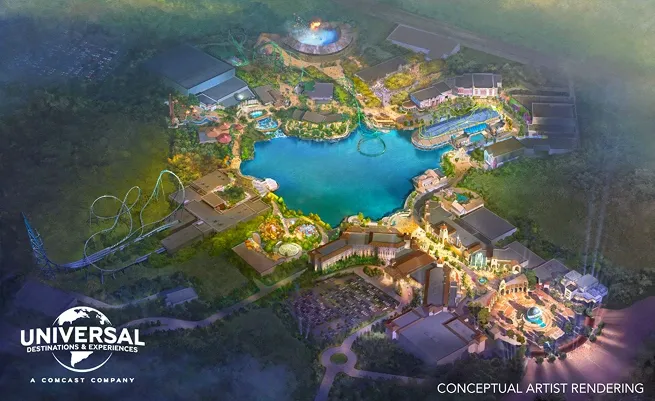
In December 2025, a rare and powerful planning tool was activated in the UK: the Special Development Order (SDO). With a single signature, the Ministry of Housing bypassed years of local bureaucracy to green-light Universal Studios Great Britain in Bedfordshire. For the theme park industry, it's a monumental win. For the average British citizen, it's a stinging reminder of the 'Efficiency Gap' that defines our modern infrastructure. We are looking at a future where a multi-billion dollar giant can negotiate their way around the system, while the rest of us are left staring at 350,000 pages of paperwork.

The SDO: A Nuclear Option for Planning
Normal planning procedures are a marathon of committee meetings, public consultations, and appeals. It is a system designed to slow things down. However, the SDO allows the central government to take the wheel for projects of National Significance. Universal didn't just get a 'yes'. They got a fast-pass. This project is expected to bring 12,000 jobs and a staggering £35 billion in economic impact. This is precisely why the government was willing to pull the trigger on the SDO. The speed is unprecedented. It took just 24 months to reach this milestone, a pace that makes standard planning look like it is moving through molasses.
The site in Bedfordshire was chosen for its strategic location, but the real strategy was in the boardroom. Universal knew that to build something of this scale, they couldn't afford to be bogged down in local council debates about traffic lights and noise pollution for a decade. They sought a direct line to the top. By securing an SDO, they effectively shifted the responsibility from local planners to the Secretary of State. This move is not without controversy. Critics argue it erodes local democracy, while supporters point to the immediate influx of investment that the UK desperately needs. It is a high-stakes gamble that has clearly paid off for the entertainment giant.
The Contrast: The £1.2 Billion Paper Trail
To understand why this 'fast track' is actually a good thing, we have to look at the alternative. The Lower Thames Crossing is a proposed 4km tunnel that has become a symbol of bureaucratic failure. Before a single spade hit the dirt, the UK government spent £1.2 billion on the planning application alone. That application was over 350,000 pages long. It is officially the longest in the history of global infrastructure. We are currently in a situation where we spend a quarter of the cost of a Swedish 18km tunnel just to talk about building a 4km one here. The sheer weight of that paperwork is enough to crush any national ambition.
When you look at the Lower Thames Crossing, you see a project that has been paralyzed by its own process. Thousands of consultants, lawyers, and environmental assessors have been working on this for over a decade. The cost of the planning process alone is more than the total construction cost of similar projects in other parts of Europe. It is a 'paperwork tax' that every UK citizen is paying. This is the baseline that we should be using to judge the Universal deal. Universal’s SDO didn't just save time. it likely saved hundreds of millions of pounds that would have otherwise been vanished into the void of planning meetings and legal reviews.
The 'Secret' Cost of Not Building
There is a hidden cost to these delays that rarely makes the headlines. Every year a project like the Lower Thames Crossing is delayed, the cost of labor and materials rises with inflation. A tunnel that would have cost £5 billion in 2020 now costs closer to £10 billion. This is money that could have been spent on schools, hospitals, or the very rail networks that we are so often told are 'unaffordable.' By fast-tracking Universal, the government is acknowledging that time is money. They are finally admitting that the current system is broken beyond repair for projects that actually move the needle for the economy.
Why This Matters to You
The scandal isn't that Universal got special treatment. The scandal is that everyone else doesn't. While multi-billion dollar giants can negotiate their way around the system, the average person looking to build a modest kitchen extension or a loft conversion is still stuck in a system that hasn't changed since the 1940s. The Universal deal proves that the UK can move fast when it wants to. It proves we have the tools to cut the paperwork tax that kills national projects and stalls local growth. We are looking at a blueprint for what is possible if we stop treating efficiency as a special order.
Think about the millions of hours of human productivity lost every year to the planning system. Think about the projects that were never even proposed because the developers knew they would be stuck in the mud for twenty years. Universal Studios Great Britain is more than just a theme park. It is a challenge to the status quo. It is a sign that the UK might finally be ready to build again. If we can do this for a resort in Bedfordshire, we can do it for the infrastructure that connects our cities and the houses that we live in. Universal is the blueprint. It is time we started using it for everything else.
Universal Studios Great Britain is a blueprint for what is possible. It is time we stopped treating efficiency as a 'special order' and started making it the standard. We need a system that prioritizes outcomes over process. We need a system that understands that every day of delay is a day of lost opportunity. If you are tired of hearing why we can't build, the Bedfordshire project is the answer you have been waiting for.



Comments ()